
Chicago City clerk’s Office
Systems Design & Strategy
Context
Today, civic technology acts as a facilitator of government power. Focusing on how that power is wielded and expressed, we examine the civic technologies that Chicago’s government activates to police speeds, intersections, roads, and people. These infrastructures have been at the center of complex issues and inequities faced by Chicago residents. We took a solution-oriented approach to imagining new systems embracing these complex issues through collective intelligence, civic infrastructures, and community empowerment.
We applied open innovation practices for leveraging the interconnectivity of markets, technology, finance, and social networks. Using generative prototyping and research through designing, we were able to envision new infrastructures that enable new modes of operation, governance, and revenue generation that create a new Chicago.
Challenge
We worked with the City Clerks Office to envision a future built on equitable and sustainable outcomes for all their residents, bound by the resources, restraints, and resiliency of Chicago.
My Role
Strategy, Project Management, and Production
Team
Many Wonderful Classmates - Full list included in report
Advisors: Chris Rudd, Ruth Schmit, and Carlos Texiera
Read more and watch our presentation on ID’s site.
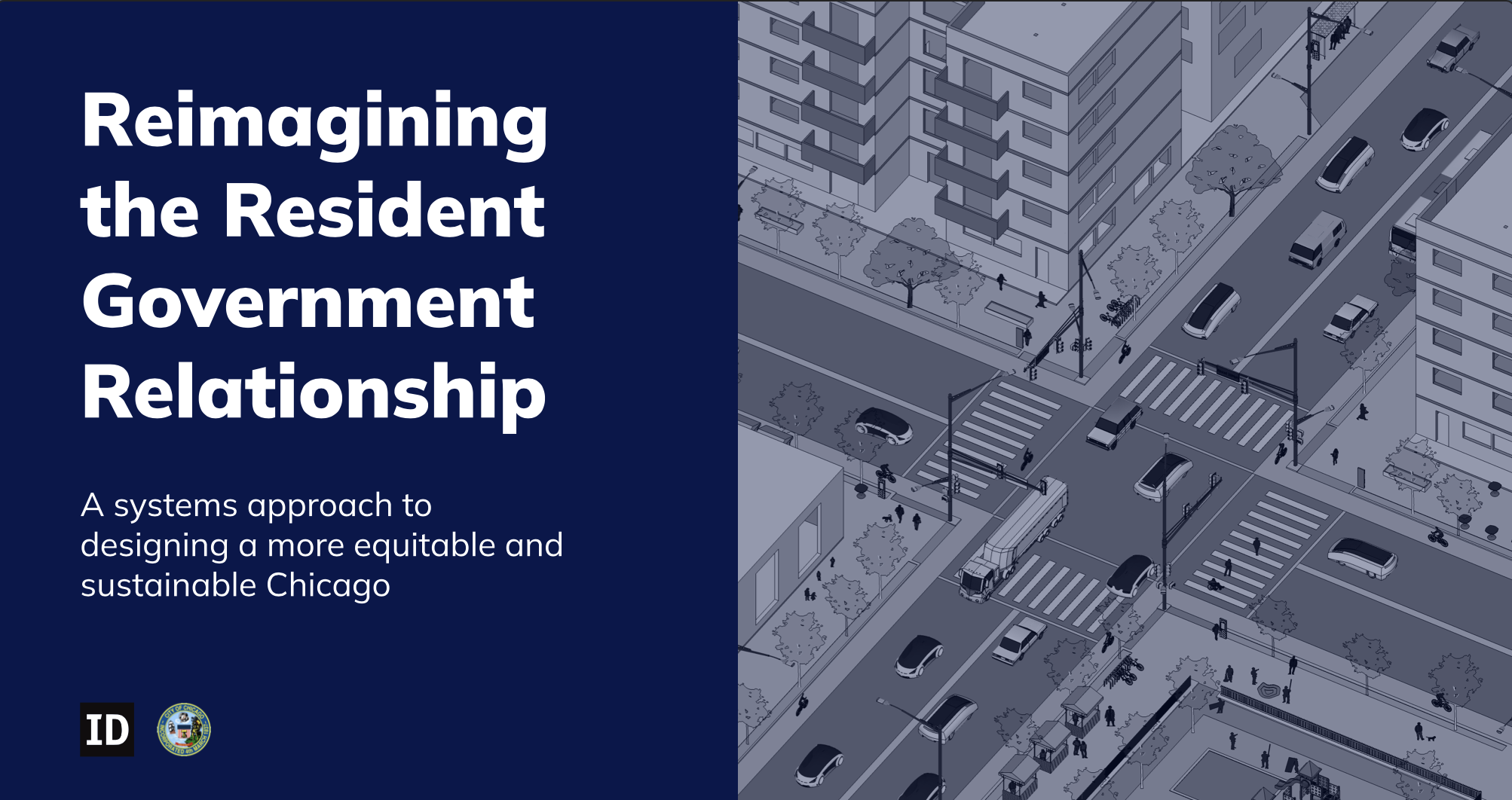
The Ask: Rethink Fines & Fees
Learning from the work previously done by the Institute of Design and the City of Chicago on ticket reform, our class wanted to take a systems approach to unpack the underlying causes and issues of the entire system that includes ticketing but also the entire Fines and Fees department.
When looking at the city of Chicago, we found in our research that the fines and fees system is fraught with inequities that range from the amount of the fines and fees, access to efficient mobility infrastructure, the high cost of driving, as well as the lack of corporate responsibility for road use. Current City leadership has taken some steps towards reform, including establishing the Fines, Fees and Access Collaborative, passing ordinances to reform towing and some forms of impoundment, and supporting the License to Work Act. Yet, many of these reforms focus downstream, on what happens after the tickets have piled up and families have already spiraled into debt. Knowing this history helped inform our vision for a new equitable, sustainable infrastructure for the people of Chicago.
Generative Prototyping
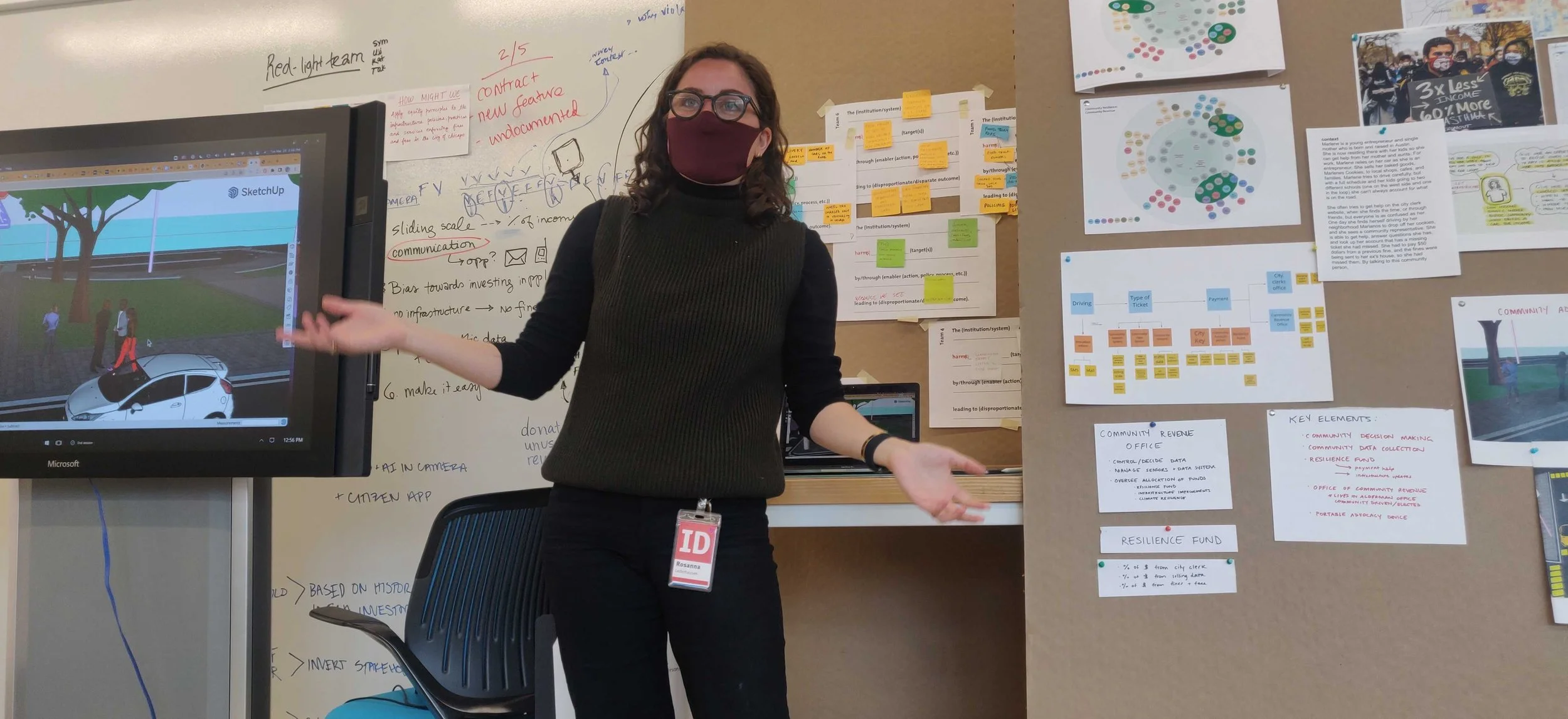
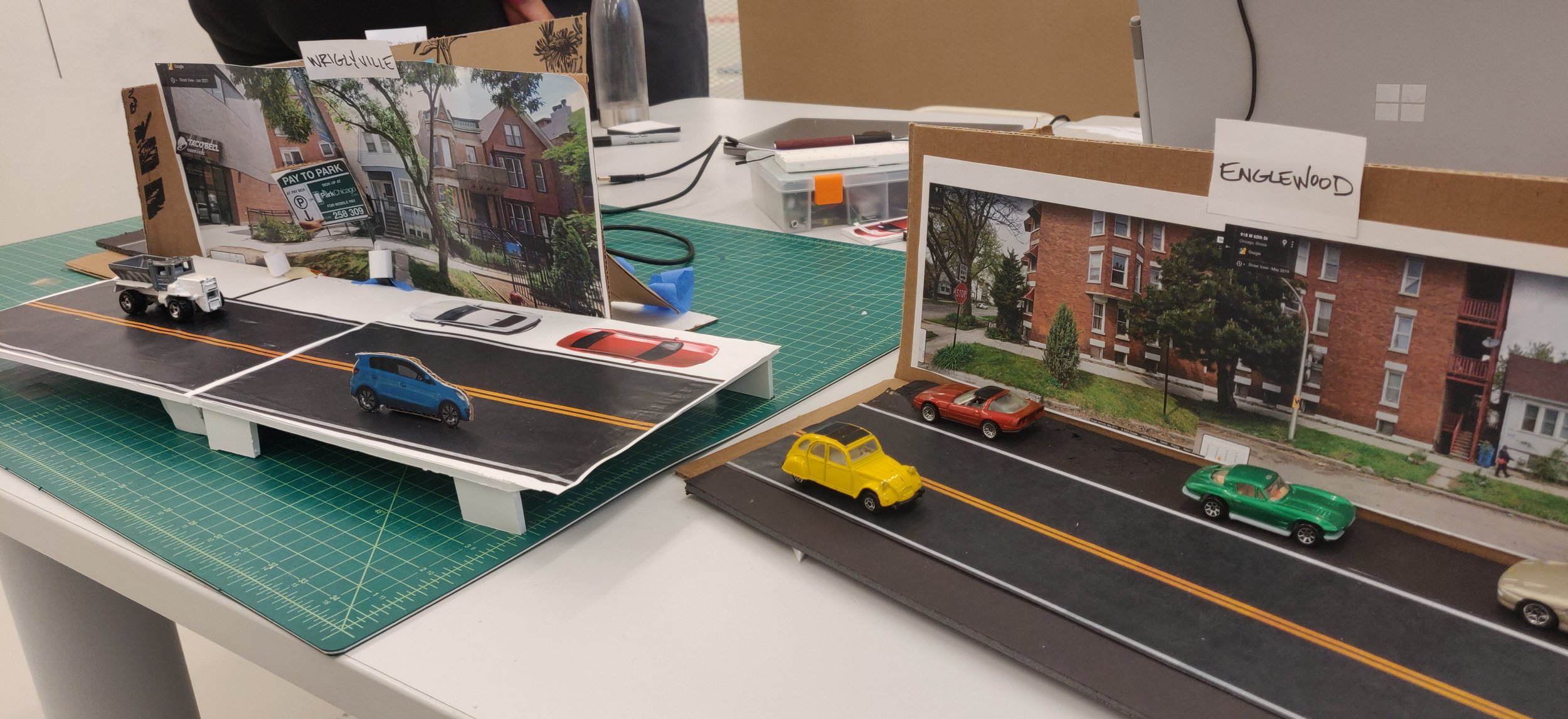
This course was built on the framework of generative prototyping, a method that uses rapid experimentation, interdisciplinary teamwork, and physical prototypes as a means of ideation. Unlike other courses at ID where the focus is on the rigor of research and human-centered approach, we used this process to quickly get into ideation in order to critique, adapt, and push the needle as far as we could each week. Using computation as a core element of our prototypes, we were able to build pieces of the infrastructure, whether that be a new approach to data collection or community input. We organized ourselves into diverse teams that rotated throughout the semester, each week presenting a new prototype that displayed a feature of the Chicago that we wished to build. By using the current state as our initial playground, we were able to question equity, sustainability, and true community-driven development in our work. This thinking allowed us to explore well beyond the scope of the project and the scope of the City Clerk’s office.
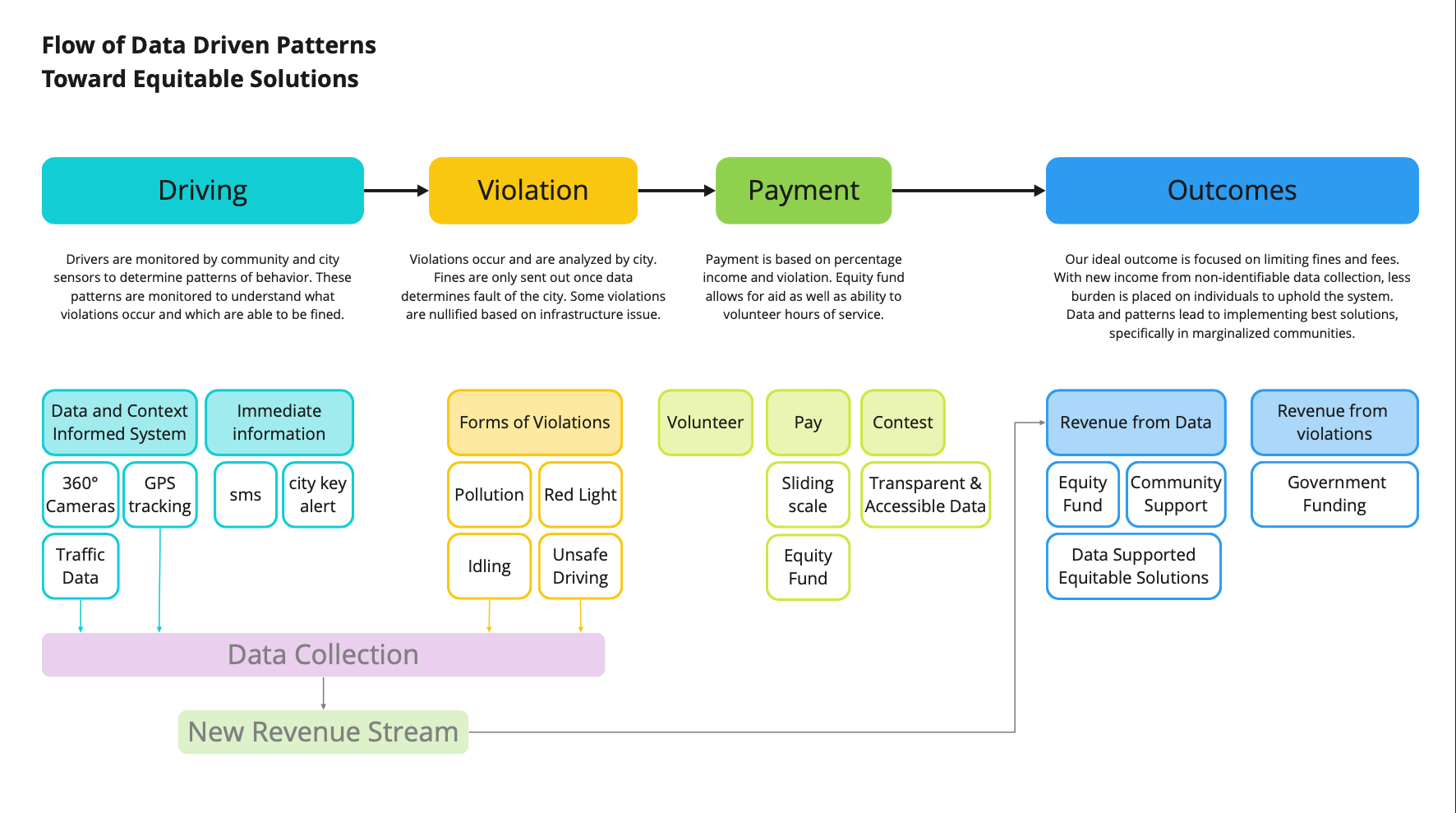
Our Solution: Shifting Goals
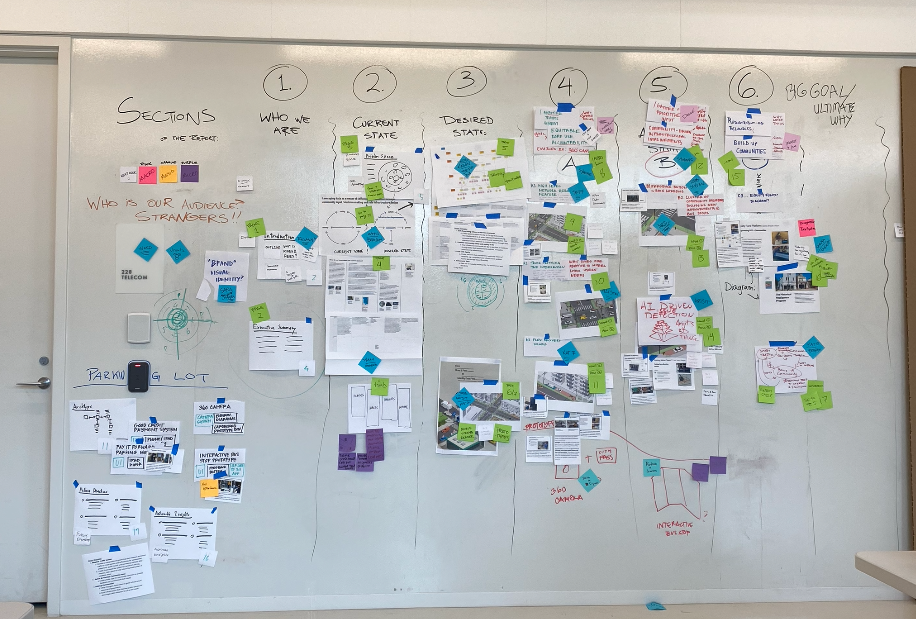
Throughout the course, with every idea that was built, we questioned how equitable and how sustainable it would make our system. Based on that process, we found that our infrastructure is guided by four primary goals, which were synthesized through the work completed throughout the semester. Through a greater discussion, we highlighted key elements and issues critical to the infrastructure we envision, and the changes we believe are meaningful.
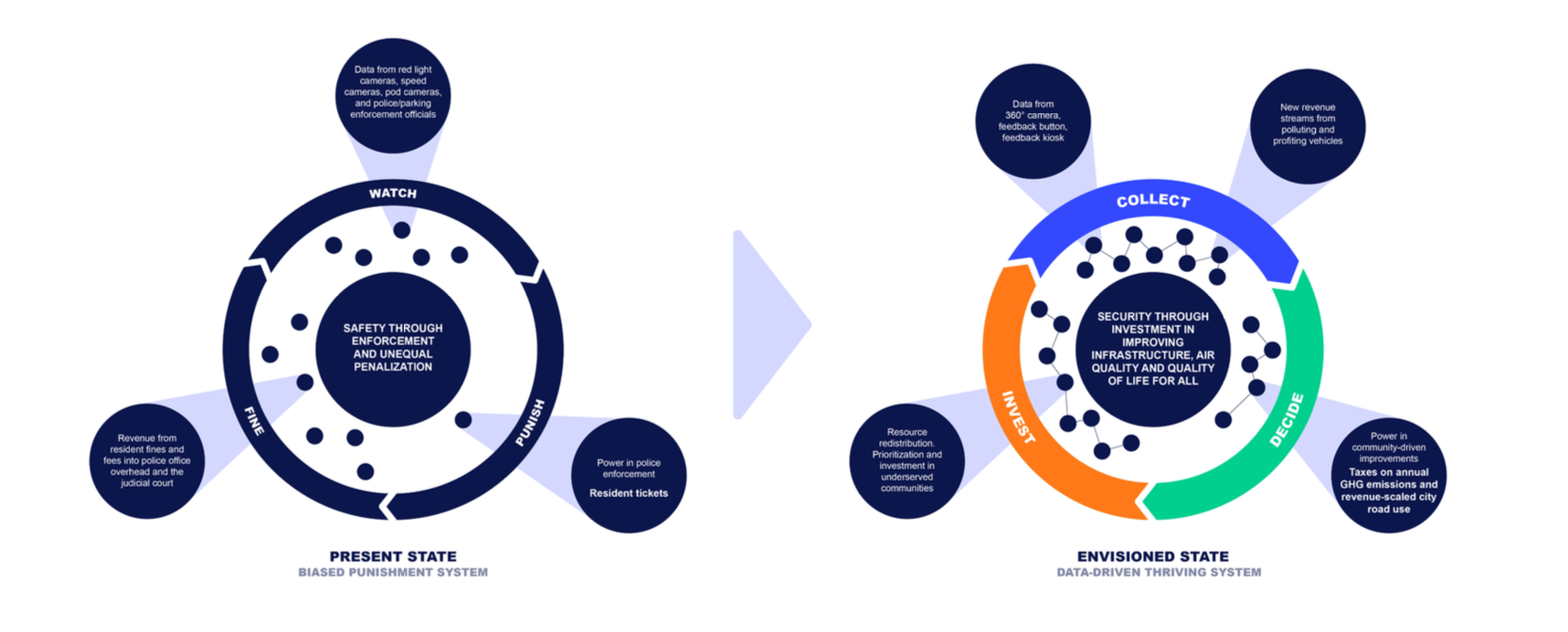
From Watch, Punish, and Fine to Collect, Decide and Invest
Our New Goals
Shift from Fining Citizens to Fair Fee Structures
Not all actors and agents pay fairly for their use of the infrastructure. This system would enable adaptive rules that generate value to all actors utilizing the infrastructure. Collect fees from individual and corporate actors proportional to the value provided.
Lead with Equity
With the goal of being anti-racist, we want to center on current inequities for BIPOC residents. Additionally, we need to create solutions that consider the needs and means of residents, e.g., purposeful civic infrastructure updates, progressive income-based fines and fees. City governance can then shift away from accruing fines and fees that residents are unable to pay and providing a healthier, more sustainable system that empowers historically marginalized people and neglected neighborhoods.
Promote Community Safety and Quality of Life
From redlining to the placement of highways in low income BIPOC communities, Chicago was built on structural racism. Not all neighborhoods look the same and the citizens shouldn’t be blamed for this infrastructure barrier. New infrastructures, specifically targeted in opportunity zones noted by the City of Chicago, improve the day-to-day lives of residents through better built environments, policies, and safety measures that eliminate bias.
Democratic Data
Trust in data and power needs to be managed. Data use must be mutually beneficial for City Government and residents. Enabling transparency and accountability through public data leads to actionable insights, and greater efficiency and effectiveness of addressing infrastructure issues.
Results: Our Three Strategies
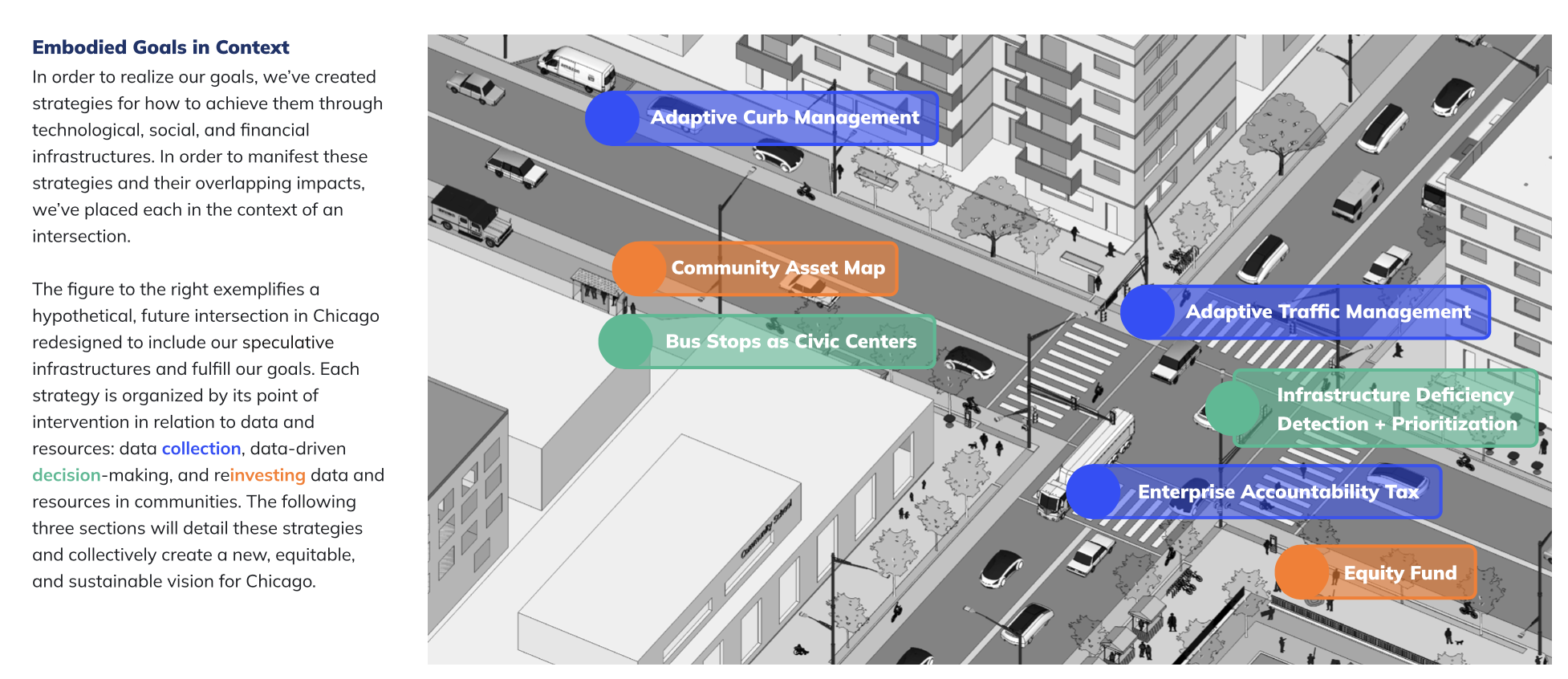
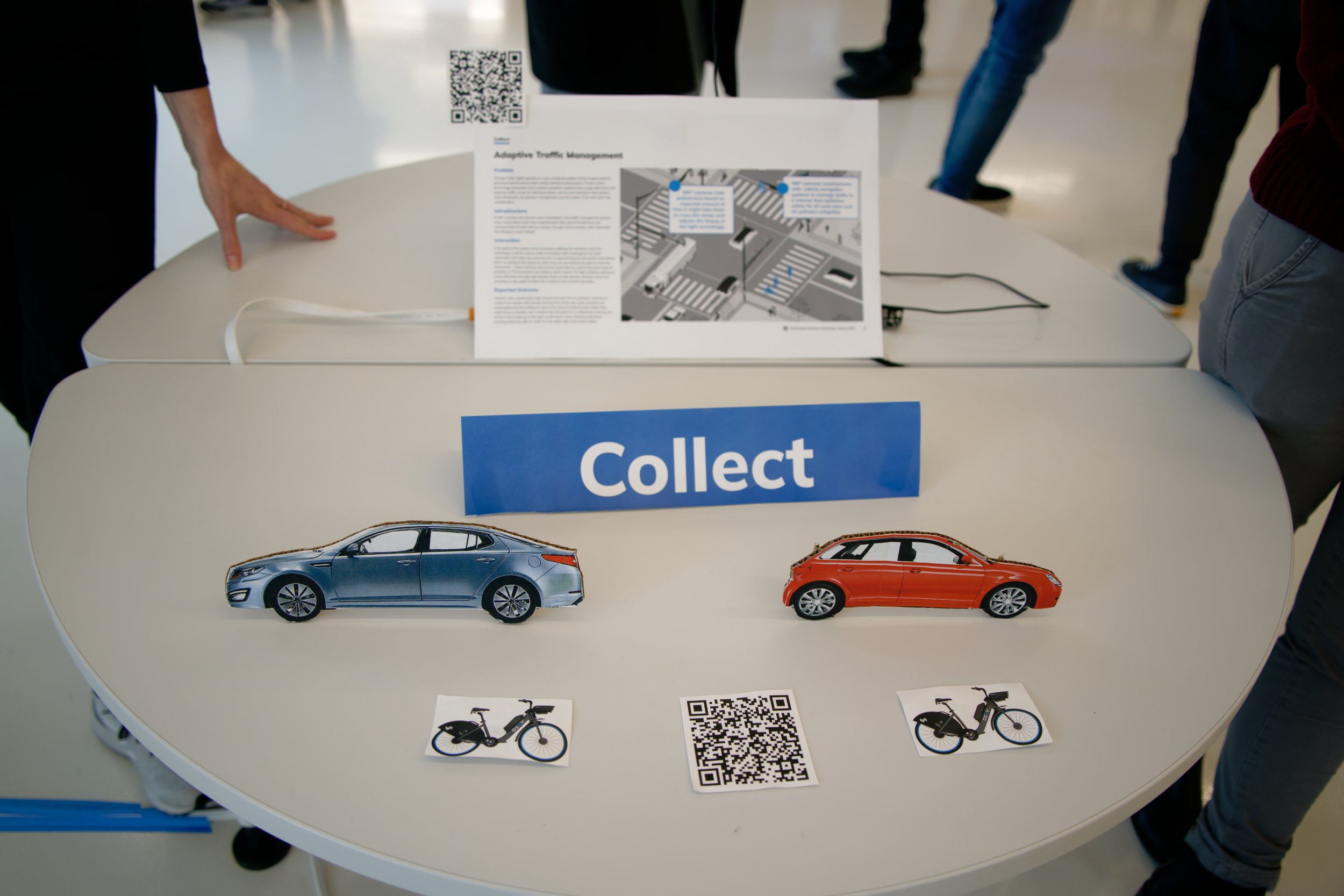
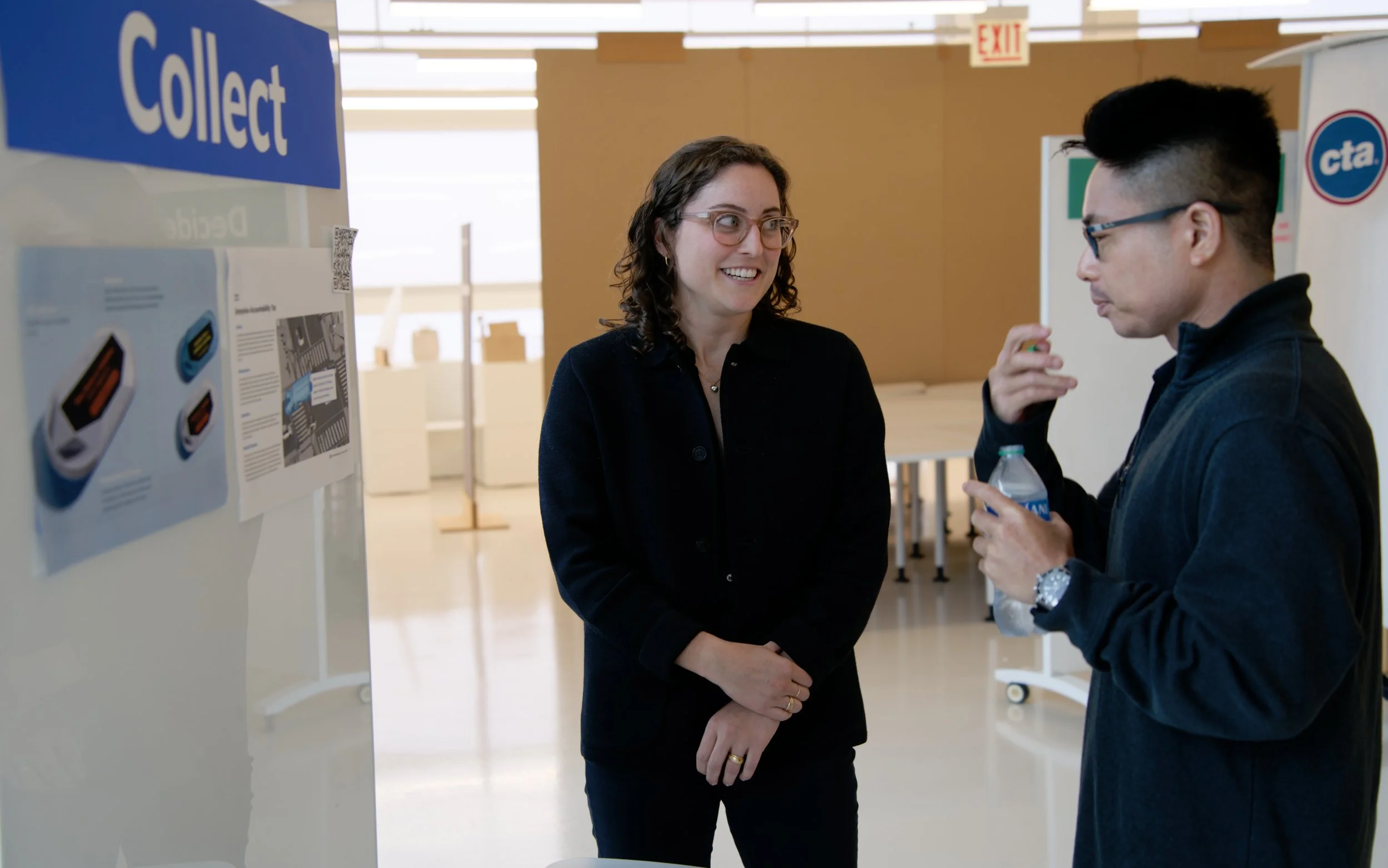
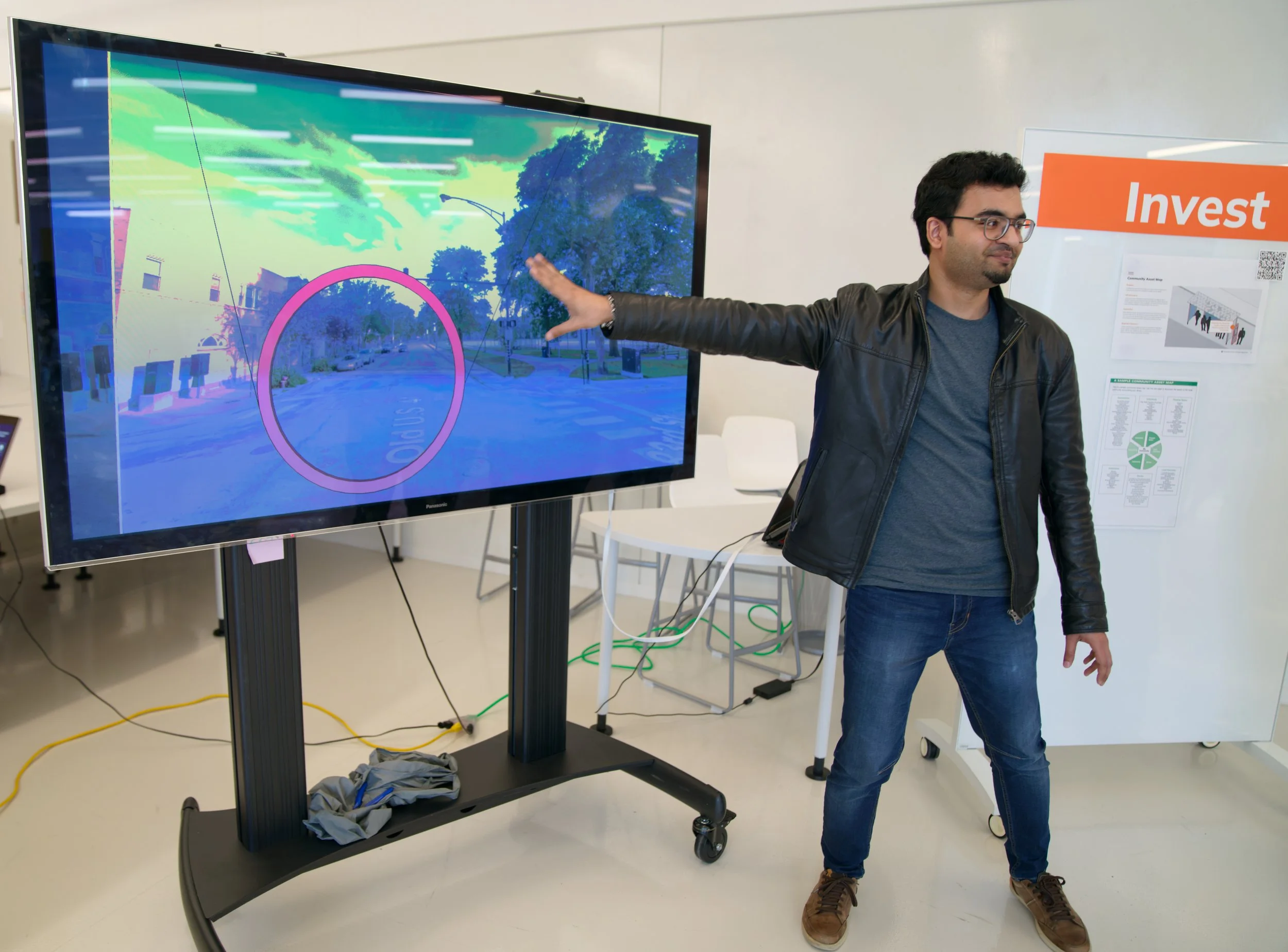
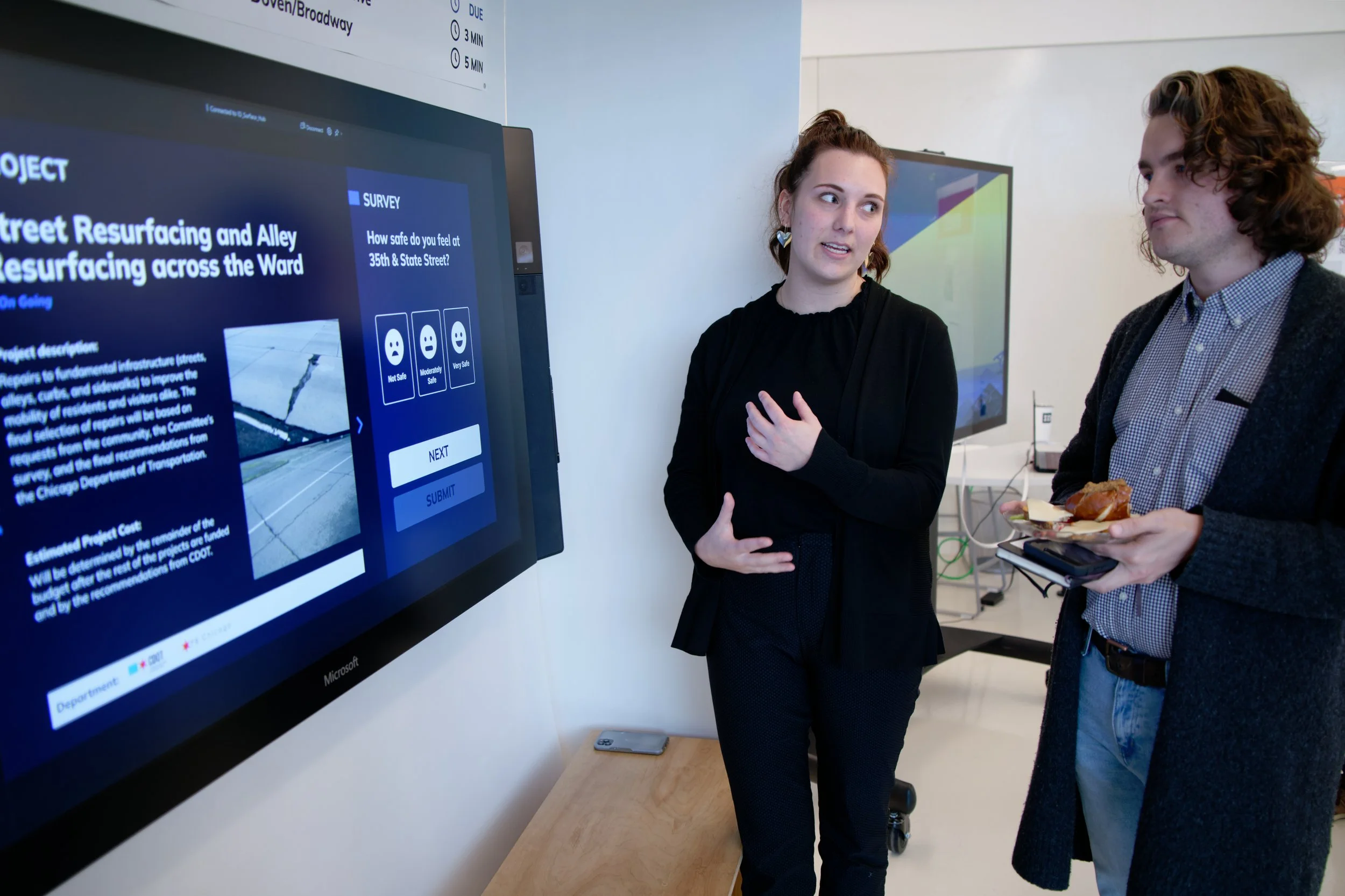
Above: Prototypes being presented to a showcase.
Below: Two Strategies Explained
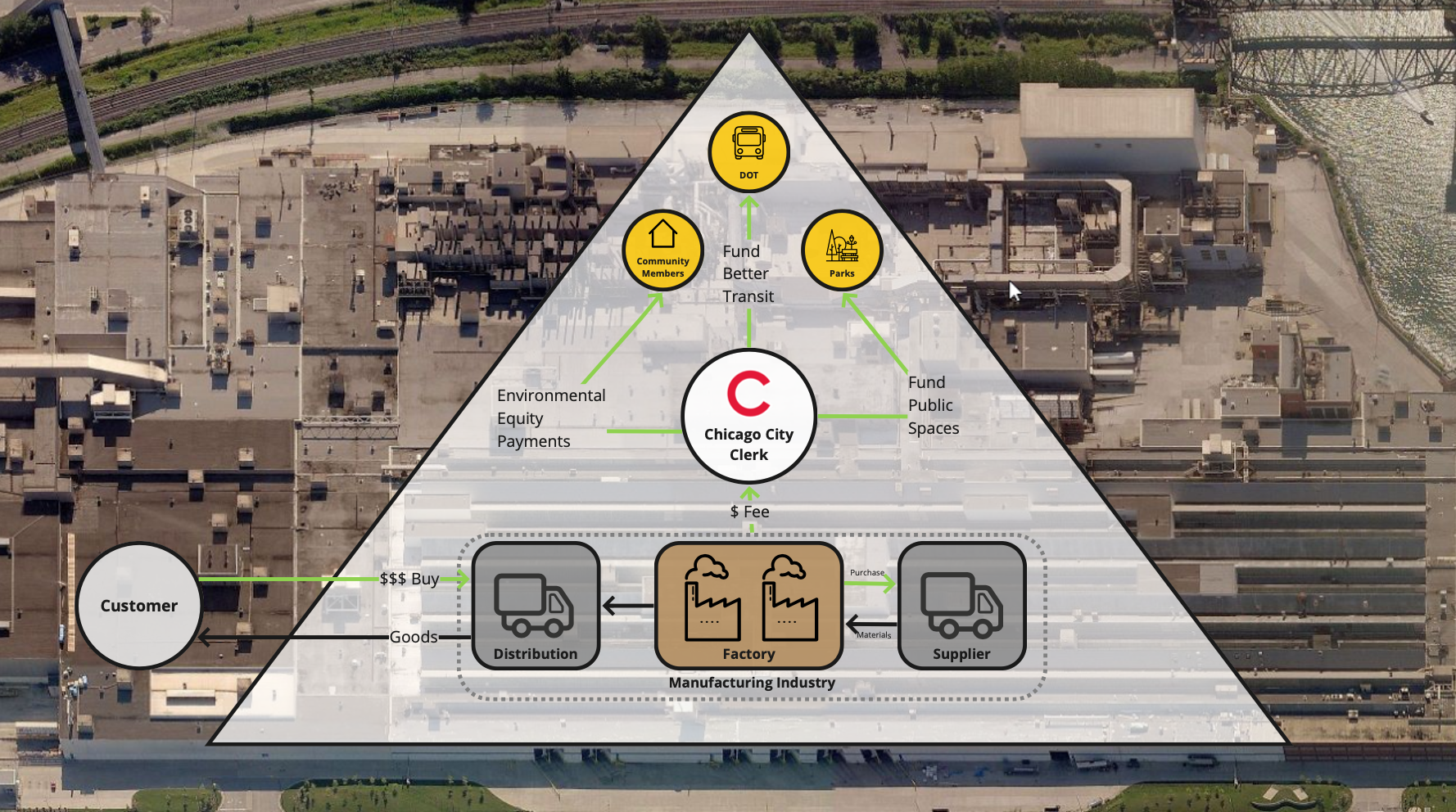
Collect: Enterprise Accountability Tax
Problem
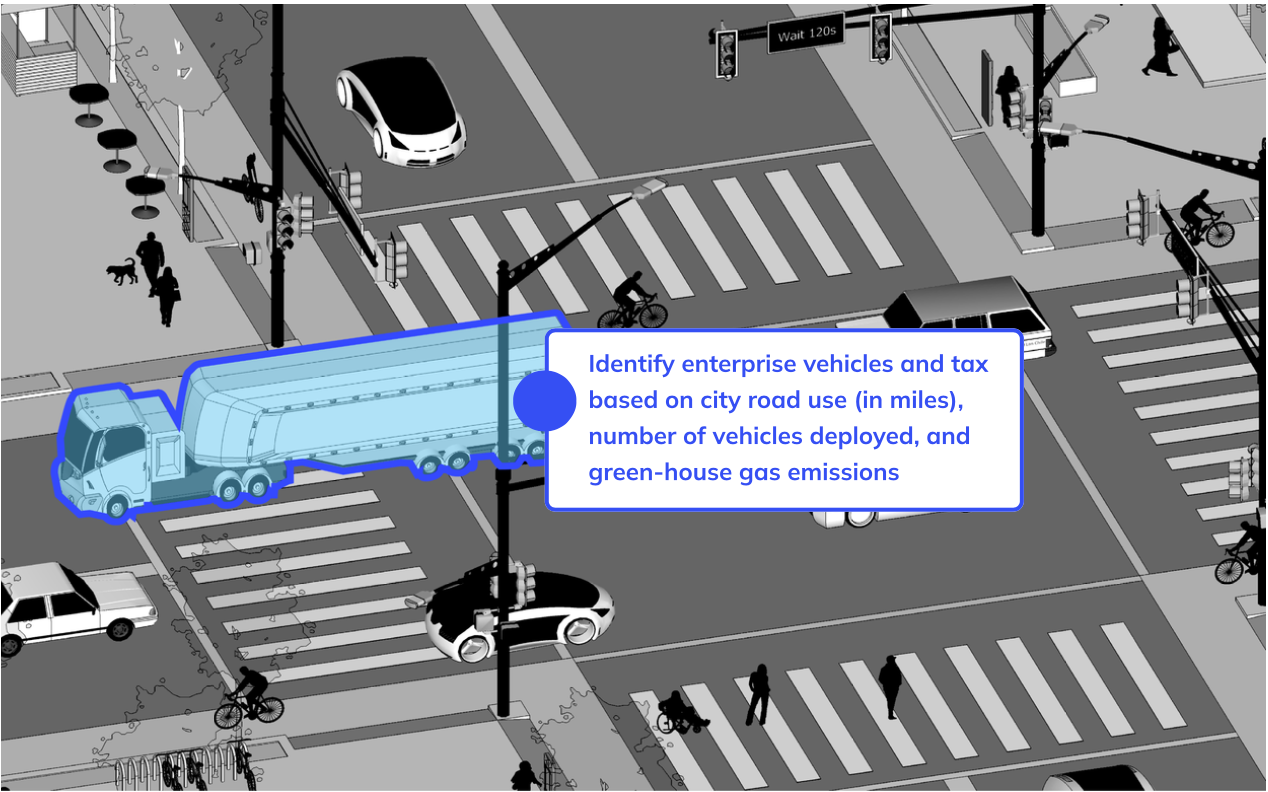
Growing fleets of large enterprise vehicles, frequently used on city streets, not only cause increased wear on roads, but also generate large amounts of pollution that disproportionately affect the health of residents who breathe that city air all day. Cities need to be more equipped to gain revenue for road improvements and sustainable transportation updates proportionally from those who use roads the most.
Interaction
When enterprise vehicles move throughout cities, they are tracked and coded with the 360º cameras and sensors so their miles traveled within city limits and approximate greenhouse gas emission contribution on city streets is recorded for annual tax purposes.
Outcome
These taxes can ensure that cities are able to cover the costs of road maintenance and investment in user needs from street infrastructure. With this alternative revenue stream that taxes the highest polluters, with the heaviest vehicles, most miles traveled, and most revenue earned, the city of Chicago could be relieved of the need to police streets to enforce fines as a means of financial income.
Decide: Bus Stops as Civic Centers
Problem
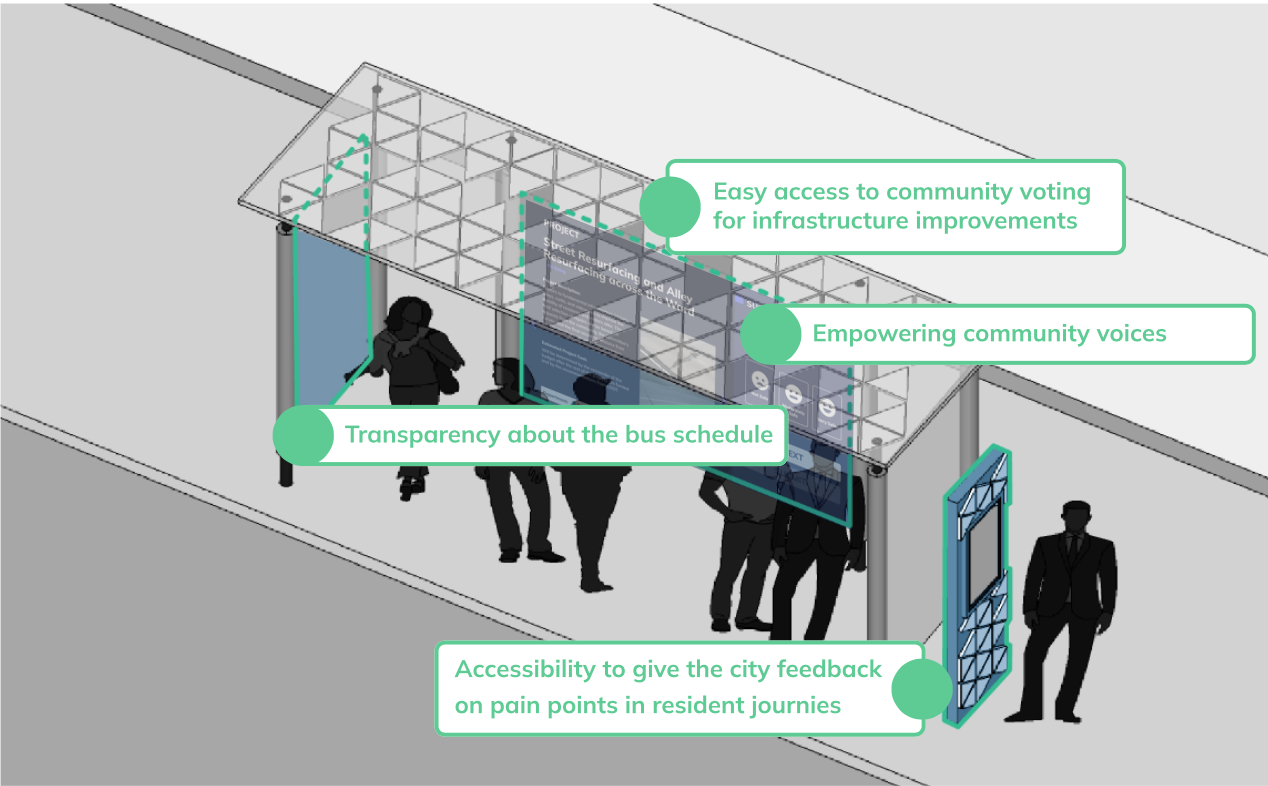
Traditionally communities have been excluded from the decision-making process in systems that govern how and where resources and amenities are allocated. In order to create a more equitable and reciprocal relationship between residents and government, we need to include community voices in an accessible way.
Interaction
Community residents would tap a button to vote for their satisfaction levels and most pressing issues in the neighborhood and/or fill out a longer format survey if they are able to take the time to provide more detailed feedback. The residents will then be able to see the statistics of overall voting update live and see issues, or most-voted areas for local improvement that are trending.
Outcome
The collected voting data will be brought to the Local Committee where it will inform where resource allocation is prioritized (i.e. repairing a sidewalk, cleaning up a park, or investing in a new fresh food market). Since these new opportunities for civic dialogue are placed in an open, public space, they will likely also increase conversation within communities about the potential for improvements, and increase democratic participation overall.